Identity and security teams have spent years locking down authentication. Multi-factor authentication (MFA) and passkeys made stolen passwords much less useful, so attackers moved to what happens after sign-in. Now, they steal the session cookie or token a service issues once someone signs in successfully. Replayed from the attacker’s own machine, it looks like the original user and never triggers a password or MFA prompt. They also collect credentials that infostealer malware copied off personal and contractor devices, outside anything the company’s identity controls can see.
SpyCloud’s identity threat detection and response (ITDR) recaptures stolen identity data from criminal infrastructure, including sessions and tokens. It then resolves the exposure inside the identity provider (IdP), either automatically or after the team approves each action.
This comparison covers how SpyCloud differs from its competitors and what to look for when evaluating identity-focused ITDR.
Why organizations evaluate SpyCloud alternatives
Vendor reviews tend to happen on a schedule, usually at procurement cycles and contract renewals, and a search for SpyCloud alternatives may be part of that due diligence. SpyCloud serves hundreds of global organizations, including 7 for the Fortune 10, and maintains System and Organization Controls (SOC) 2 Type II certification. Requirements still change between renewals, and a few reasons come up most often.
- Budget alignment: Teams with tight or shifting budgets compare pricing models and scope across vendors. ITDR pricing depends on deployment size, features, and integrations, and most enterprise vendors quote custom pricing, so a side-by-side comparison takes a conversation with each vendor.
- Broader threat intelligence needs: Some programs need coverage beyond identity, such as forum and marketplace monitoring or geopolitical intelligence. SpyCloud concentrates on stolen identity data, so programs with broader needs often look at wider platforms.
- Vendor consolidation: A shorter vendor list means looking for one platform that covers several functions. It’s useful to check how deep each option goes on identity, since many attacks start with a valid sign-in or session.
- Specific use case requirements: Needs like consumer account protection or cybercrime investigations point toward different tools, so buyers check whether a vendor’s strengths match the use cases in front of them.
How to evaluate identity threat detection and response solutions
An identity exposure is any compromised credential, session cookie, token, piece of personally identifiable information (PII), or other identity data found in criminal channels. Recaptured data is identity data collected directly from criminal infrastructure. MFA and passkeys protect the sign-in. A stolen session cookie or refresh token replays the result of that sign-in and skips it entirely.
Whether a shortlist includes SpyCloud competitors in the identity category or broader platforms, two questions separate the options: where the signal comes from, and what the product does about it.
Data quality and recapture methodology
A vendor can only act on what it can see. ITDR tools built into IdP and endpoint platforms watch sign-ins and sessions inside their own environment, so theft that happens elsewhere, like an infected contractor laptop or a phishing kit, never reaches them. SpyCloud’s recaptured data now totals more than 1 trillion identity assets, and stolen session cookies and tokens make up nearly half of them.
A checklist for any vendor includes:
- Data sourcing: Ask whether the vendor collects directly from criminal infrastructure, including sessions and credentials exfiltrated by malware and sessions captured by phishing kits, or compiles breach dumps and open-source intelligence. Compilations often repackage data that has circulated for a long time.
- Freshness: Sessions and tokens expire or get revoked, and a refresh token can stay valid for up to 90 days and survive a password reset. The older a finding is, the less likely there’s still something to act on.
- Coverage breadth: Passwords no longer cover the risk. Check for session cookies, tokens, PII, financial data, and application programming interface (API) keys, and for exposures from unmanaged devices. Forty percent of malware infections in 2025 happened on endpoints that already had endpoint detection and response (EDR) or antivirus installed.
- Identity correlation: Exposures turn up in fragments across personal and work accounts. SpyCloud’s IDLink matches them into holistic identities and finds up to 14x more passwords per user than a standard search.
Automated remediation and integration depth
Some solutions detect an exposure and hand the team a queue. Others act on it inside the tools the team already runs, and for identity teams that second group matters most, because the fix happens in the IdP. Integration depth covers security information and event management (SIEM), security orchestration, automation, and response (SOAR), EDR, and IdP tools, and it depends on how much custom development each connection needs.
- Detection vs. remediation: Check whether the product only reports exposures or also resets a password, revokes a session, or disables an account. A password reset doesn’t end a stolen session, so look for session and refresh token revocation.
- Integration categories: SpyCloud integrates with SIEM tools like Splunk, Elastic, and Google SecOps, SOAR platforms like Cortex XSOAR, Tines, and Swimlane, EDR tools like CrowdStrike Falcon and Microsoft Defender, and IdPs like Okta, Entra ID, Active Directory, and Ping Identity.
- Workflow compatibility: Compare pre-built connectors with custom development. SpyCloud Connect is a hosted service where SpyCloud engineers build and maintain custom workflows.
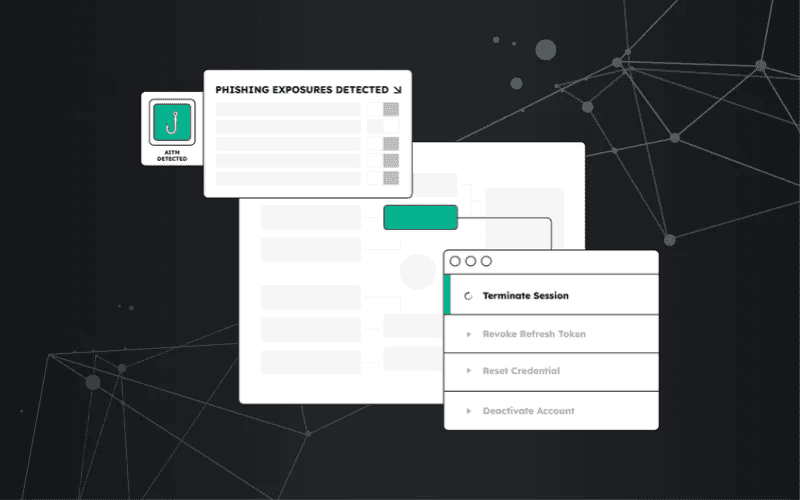
- Remediation speed and control: SpyCloud reports automating credential resets in as little as 5 minutes from discovery. Entra ID Guardian and Okta Workforce Guardian reset exposed passwords and revoke exposed sessions, as well as refresh tokens through the IdP. Teams can confirm each action manually or set exclusion rules and timing for automatic handling. Active Directory Guardian resets compromised passwords and can trigger Okta or Entra ID to revoke the user’s active sessions.
Top SpyCloud competitors compared
SpyCloud competitors fall into a few groups: dedicated identity and infostealer platforms, broader threat intelligence suites, and digital risk protection or dark web monitoring tools. Review them by how much of each product is identity. For SpyCloud, identity threat protection is the whole product.
For the vendors below, identity is a module, a feed, or one line in a wider remit. Teams also weigh identity and access management (IAM) and privileged access management (PAM) platforms, along with the ITDR tools built into identity and endpoint suites, against SpyCloud.
Recorded Future
Recorded Future is a broad threat intelligence platform covering adversaries, infrastructure, and targets, with identity handled by an Identity Intelligence module. The module detects exposed employee and customer credentials and connects to IAM and SOAR tools to trigger actions like password resets and MFA enforcement. Identity is one module in a much larger platform.
Flashpoint
Flashpoint is a threat intelligence and risk platform built on primary-source collections from illicit communities and analyst-enriched intelligence. Its Account Takeover monitoring covers compromised credentials and session cookies, within a platform that also spans cyber, vulnerability, and physical security intelligence. Identity monitoring is one capability in that range, and the offering is oriented around analyst-driven intelligence.
Flare
Flare is a threat exposure management platform that combines threat intelligence, external attack surface management, and digital risk protection. It monitors dark web forums, Telegram channels, and stealer log markets, and its identity module validates exposed credentials against Entra ID and Okta and acts on confirmed matches. That workflow is scoped to credential matches, so exposed sessions surfaced without a matching credential don’t trigger the same response. Best fit: teams that want brand protection and attack surface visibility alongside credential monitoring.
Hudson Rock
Hudson Rock specializes in infostealer intelligence. Its Cavalier platform draws on data from machines infected with infostealer malware and alerts teams to compromised employee, customer, and vendor credentials through notifications and an API feed. As a specialist, its scope is narrower than platforms that also correlate breach and phishing exposures to a single identity. Best fit: organizations focused on infostealer-sourced exposures and infected-device data.
ZeroFox
ZeroFox is an external cybersecurity platform centered on digital risk protection, with brand, domain, and executive protection and takedown services for impersonations and malicious content. Identity and fraud data arrive as intelligence feeds alongside those services. Its focus is the external brand and social media surface, not workforce identity exposures. Best fit: organizations with significant social media exposure and brand protection needs.
Constella Intelligence
Constella describes itself as an identity risk intelligence provider, with a data lake of breach and infostealer data delivered through APIs, real-time alerting, and investigative tools. Its range also includes executive and brand protection, open-source intelligence (OSINT) investigations, and identity theft monitoring for consumer-facing providers, so enterprise workforce response is one use among several. Best fit: organizations that want identity intelligence combined with digital risk or investigative tooling.
Know your gaps before you pick a vendor.
The Identity Threat Protection Maturity Assessment places your program in one of four maturity tiers and returns a prioritized plan, so you can match what you need to what vendors offer.
At a glance
| Vendor | Primary focus | Data sources | Remediation approach | Best fit |
|---|---|---|---|---|
| SpyCloud | Identity threat detection and response, driven by recaptured data | Breaches, infostealer malware, and phishing, recaptured from criminal infrastructure | Password resets and session and refresh token revocation through IdP integrations (Okta, Entra ID, Active Directory) | Organizations prioritizing identity exposure remediation |
| Recorded Future | Broad threat intelligence | Open source, dark web, and technical sources | IAM and SOAR integrations for password resets, MFA enforcement, and access denial | Enterprise-wide threat intelligence needs |
| Flashpoint | Threat intelligence and risk | Illicit communities, marketplaces, chat services, analyst research | Alerts and API integration with existing tools | Mature threat intelligence programs |
| Flare | Threat exposure management | Dark web, Telegram, stealer logs, paste sites | Entra ID and Okta validation, plus SIEM, SOAR, and ticketing integrations | Brand protection and attack surface visibility |
| Hudson Rock | Infostealer intelligence | Infostealer infections | Alerts and API feed into SIEMs | Infostealer-focused credential monitoring |
| ZeroFox | Digital risk protection | Social media, surface, deep, and dark web | Takedown services | Social media and brand protection |
| Constella Intelligence | Identity risk intelligence | Breach and infostealer data lake | APIs, real-time alerting, investigative tools | Combined digital risk and identity intelligence |
How to choose the right identity threat detection and response platform
The right choice depends on which problem is most urgent, and the decision rarely has to be either/or.
- Choose SpyCloud when: Stolen identity data is the priority, and the team wants exposures resolved inside the IdP, either automatically or with its approval. That covers session hijacking, MFA bypass, and account takeover, and matching fragmented exposures into complete identities at enterprise scale.
- Consider broader threat intelligence platforms when: The program needs geopolitical intelligence, brand protection, or forum monitoring that goes beyond identity.
- Evaluate a combined deployment when: The team wants identity depth from SpyCloud alongside broader intelligence from another platform. The two categories coexist, and many security programs run both.
SpyCloud’s ITDR works alongside IAM and the ITDR tools built into IdPs. The IdP sees sign-in signals from inside the environment. SpyCloud adds the external signal, including sessions and tokens stolen elsewhere, and acts inside the IdP. Requirements are also shifting. Non-human identities such as API keys, tokens, and the credentials behind artificial intelligence (AI) agents are a growing share of the exposure surface, so a shortlist should include a question about how each vendor covers them.
See how SpyCloud fits your stack.
Request a demo to see exposed identities matched to your workforce and resolved inside the tools you already use.
Your organization's data may already be exposed.
Billions of assets from this year’s identity events are circulating right now.
FAQs
ITDR pricing varies with deployment scope, features, and integration requirements. SpyCloud and most enterprise vendors provide custom quotes rather than published pricing, so the most accurate comparison comes from requesting quotes against the same scope from each vendor.
The answer depends on the primary use case. For preventing account takeover (ATO) and session hijacking with automated or approval-based response inside the IdP, SpyCloud specializes in identity threat detection and response. Teams that also need broader threat intelligence can pair an identity-focused tool with a platform such as Recorded Future or Flashpoint.
Yes. SpyCloud integrates with SIEM tools such as Splunk, Elastic, and Google SecOps, SOAR platforms such as Cortex XSOAR, Tines, and Swimlane, EDR tools such as CrowdStrike Falcon and Microsoft Defender, and IdPs such as Okta, Entra ID, Active Directory, and Ping Identity. SpyCloud Connect, a hosted automation service, builds and maintains custom workflows for other tools.
Free services such as Have I Been Pwned notify people when an email address appears in a known breach. SpyCloud recaptures data directly from criminal infrastructure, including session cookies and tokens stolen by malware and phishing kits, and pairs it with automated response through integrations.
Keep reading