

Demo Center Home > Third-Party Breach Data Demo
See what a single third-party breach actually exposes, and how SpyCloud matches it to your workforce and remediates the exposures automatically. Walk through everything a single third-party breach exposes, and how SpyCloud matches it to your workforce and automates the response.
Data Breach Protection by SpyCloud
A breach is never just a password. When a company is breached, criminals trade the stolen data on underground markets, and one record can carry an email, a plaintext password, a physical address, an IP, even a credit card number. SpyCloud recaptures that data close to the source, so the exposure shows up before an attacker gets to use it.
SpyCloud grades every record by exactly what is exposed, matches it against your domains to find the employees inside the breach, and drives the reset automatically before those credentials get used.
This demo follows a third-party breach from the moment SpyCloud recaptures it to the point where an exposed employee is remediated. You will see what one real breach contains, how SpyCloud grades the identity data inside it, and how the matches to your workforce turn into an automated response.
The walkthrough moves from source to remediation. SpyCloud recaptures the breach, breaks down the identity data it holds, matches it to your domains, ranks each exposure by severity, and hands the confirmed matches to your identity provider for automated action across on-premises, hybrid, and cloud environments.
SpyCloud recaptures stolen breach data from underground markets as it surfaces, often before it is widely used.
SpyCloud correlates that recaptured data against your domains to find which of your employees are inside the breach.
Each match gets a severity rating, so the most urgent exposures rise to the top while low-risk records stay out of the way.
Confirmed matches trigger a password reset through your identity provider across on-premises, hybrid, and cloud.
The demo opens a single recaptured breach, Match Group, one source out of more than 85,000.
This is a sample of what it held.
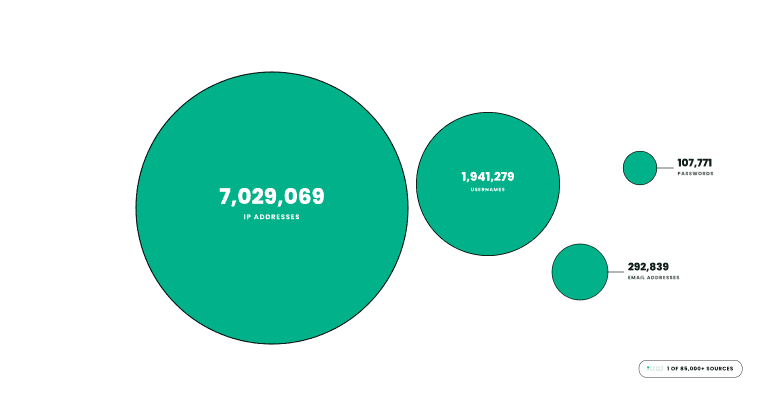
A breach like this exposes a far fuller picture of a person than a password alone, from physical addresses and birth dates to credit card numbers. That is why SpyCloud matches the contents to your domains, so you act on the records that are actually yours.
See which of your identities are already exposed in recaptured breach data, drawn from SpyCloud’s catalog.
It shows how SpyCloud recaptures a third-party breach from the criminal underground, analyzes the identity data inside it, matches it to your workforce, and drives an automated response. The walkthrough uses a real recaptured breach, grades the records by severity, and follows a confirmed match through to remediation.
Third-party breach data is stolen identity data exposed when another company is breached, then traded on underground markets. It can include company names, credentials, and personally identifiable information such as addresses, birth dates, and payment details. Because employees reuse credentials, a breach at an unrelated company can expose your workforce.
SpyCloud’s catalog holds more than 1 trillion recaptured assets collected over a decade from more than 85,000 distinct breaches, ranging from massive mega-leaks to smaller, harder-to-find sources. New breaches are added daily, so the exposure picture reflects what is actively surfacing on the criminal underground rather than a stale snapshot.
SpyCloud assigns a severity level based on exactly what is exposed. A record pairing a plaintext password with an email is rated HIGH, because that is enough for an attacker to attempt account access, while an email address alone carries lower urgency. Every record also shows its breach category, source, and publish date, so your team can confirm the exposure and prioritize the response.
SpyCloud Identity Guardians integrate directly with Active Directory, Microsoft Entra ID, and Okta to automate the response, including password resets, session revocations, and password hygiene enforcement across on-premises, hybrid, and cloud environments. Confirmed breach matches are acted on without an analyst chasing each one down.
NEW RESEARCH: Over 2/3 of orgs had an identity event last year – NHIs were the top cause. Read on →