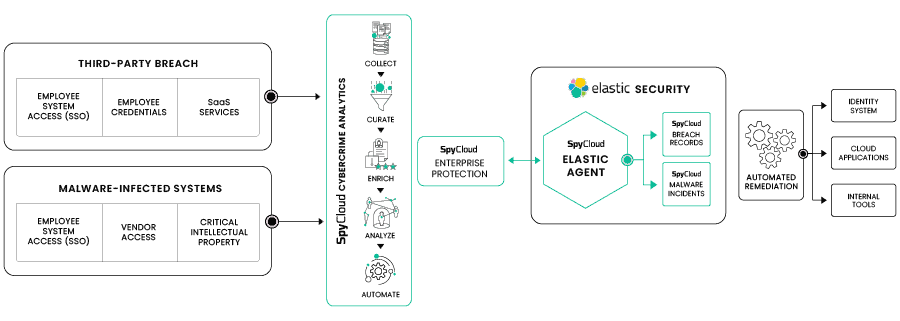
SpyCloud integrates with Elastic to deliver identity exposure intelligence directly into SIEM workflows. Security teams can correlate exposed credentials and malware-related identity risk with log and event data for faster detection and response.
BENEFITS
Native Elastic Integration Seamlessly ingest SpyCloud breach, malware, and phishing exposure data into Elastic Security for unified analysis.
Enhanced Threat Detection Improve visibility into exposed identities and risk signals that often precede account takeover and targeted attacks.
Operational Efficiency Leverage Elastic’s alerting, dashboards, and analytics capabilities to drive investigation and response directly within your existing SIEM workflows.
Customizable Visualization Use pre‑built dashboards or tailor visualizations to track exposure trends, compromised assets, and priority threat indicators.
SEE IT IN ACTION
SCREENSHOTS
HOW IT WORKS
Scheduled Ingestion: SpyCloud Enterprise Protection performs a scheduled ingest of exposure records (from phishing attacks, infostealer malware infections, breaches and combolist) via REST API into your Elastic environment.
Index and Store: Data is normalized and indexed into Elastic indices, enabling efficient search, correlation, and threat hunting.
Detect & Alert: Use Elastic alerting rules to trigger on new or high‑risk exposures (e.g., compromised credentials, infected sessions), helping security teams find and respond to issues faster.
Analyze & Visualize: Leverage Elastic dashboards and queries to investigate exposures in context alongside other security telemetry, gaining deeper insight into identity‑based threats.
Automate Response: Optional handoff to SOAR platforms enables automated incident response actions, like forcing password resets, revoking sessions, or notifying user based on SpyCloud exposure signals.